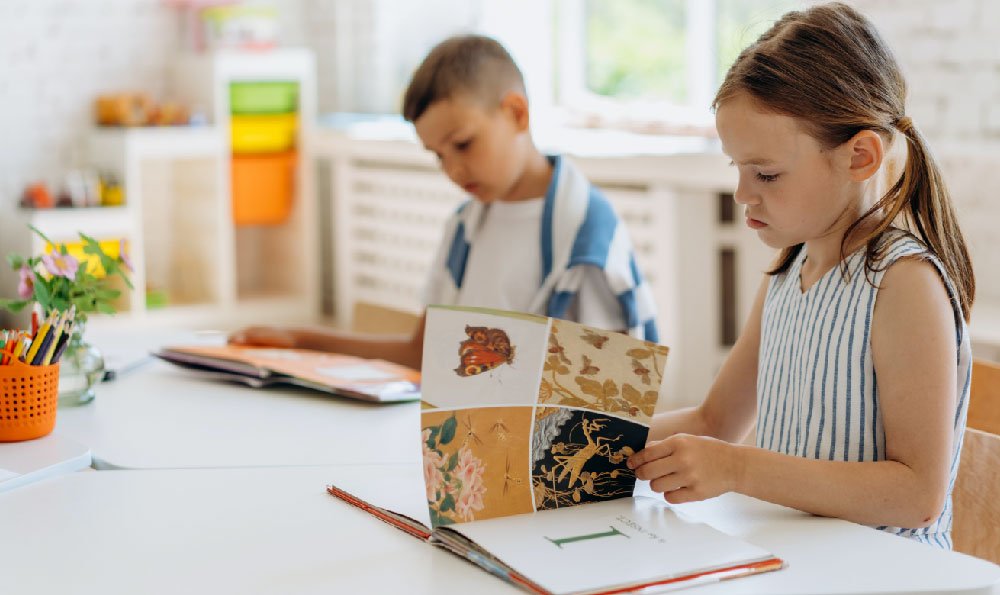
阅读题是小学生学习阅读能力的重要组成部分,通过正确的教学方法和技巧能够帮助学生提升阅读理解能力。本文将系统地介绍如何教小学生做阅读题的技巧,以帮助教师更好地指导学生阅读。
一、理解题型分类
教师应该学会将阅读题分为不同的题型,这有助于学生更好地理解问题的要求。常见的阅读题型有主旨理解题、细节理解题、推理判断题等。主旨理解题要求学生找出文章的中心思想,而细节理解题则需要学生从文章中找出具体的细节信息,推理判断题则需要学生根据文章中的线索进行推断。通过对题型的分类和理解,学生能更好地应对不同类型的阅读题。
举例:
以《小猪佩奇》这个故事为例,主旨理解题的问题可以是“佩奇最喜欢做的事情是什么?”答案是“最喜欢的事情是跳泥坑。”细节理解题的问题可以是“佩奇和爸爸在哪里跳泥坑?”答案是“在公园。”而推理判断题的问题可以是“佩奇为什么喜欢跳泥坑?”答案可以是“因为跳泥坑会让佩奇感到开心。”
二、技巧一:读题先行
教师应该教导学生在阅读文章之前先读题,这样能够帮助学生理解问题的要求。读题先行可以帮助学生明确阅读的目标,提醒他们在阅读过程中注意相关信息,避免无效阅读。
举例:
如果阅读题是关于主旨理解的,学生读题先行后会知道需要找出文章的中心思想,这样在阅读过程中就能有目的性地寻找有关中心思想的线索。
技巧二:寻找关键词
在阅读文章时,学生应该学会寻找关键词,这有助于他们理解文章的重点内容。关键词通常是与问题有关的词语,通过找到关键词,学生能更好地答题。
举例:
如果阅读题是细节理解的,学生在阅读时应该注意关键词,例如“佩奇”、“公园”等,这些词语能够帮助他们定位文章中的细节信息。
技巧三:理解文章结构
教师应该帮助学生理解文章的结构,这有助于他们更好地回答阅读题。学生需要意识到文章通常有引言、主体和结尾等部分,并学会通过理解文章的结构来寻找答案。
举例:
如果阅读题是推理判断的,学生可以通过理解文章的引言、主体和结尾来寻找线索,从而推断出问题的答案。
通过本文的介绍,我们可以了解到如何教小学生做阅读题的技巧。教师应该将阅读题进行分类,教导学生读题先行,寻找关键词,并理解文章的结构。这些技巧能够帮助学生更好地应对不同类型的阅读题,提高他们的阅读理解能力。
How to Teach Elementary Students Reading Comprehension Questions (Techniques for Teaching Elementary Students Reading Comprehension Questions)
Introduction:
Reading comprehension questions are an important part of elementary students' reading ability. By using correct teaching methods and techniques, teachers can help students improve their reading comprehension skills. This article will systematically introduce the techniques for teaching elementary students how to do reading comprehension questions, aiming to assist teachers in guiding students' reading effectively.
I. Understanding Question Types
Firstly, teachers should learn to categorize reading comprehension questions into different types, which helps students better understand the requirements of each question. Common types of reading comprehension questions include main idea comprehension questions, detail comprehension questions, and inference judgment questions. Main idea comprehension questions require students to identify the central idea of the passage, while detail comprehension questions require students to locate specific details from the text. Inference judgment questions require students to make inferences based on clues from the passage. By understanding and categorizing question types, students can better approach different types of reading comprehension questions.
Example:
Taking the story "Peppa Pig" as an example, a main idea comprehension question may be "What is Peppa's favorite activity?" The answer would be "Peppa's favorite activity is jumping in muddy puddles." A detail comprehension question may be "Where does Peppa jump in muddy puddles with her father?" The answer would be "In the park." An inference judgment question could be "Why does Peppa like jumping in muddy puddles?" The answer could be "Because jumping in muddy puddles brings joy to Peppa."
II. Technique 1: Read the Questions First
Teachers should guide students to read the questions before reading the passage. This helps students understand the requirements of the questions and set clear reading goals. Reading the questions first also reminds students to pay attention to relevant information during the reading process, avoiding ineffective reading.
Example:
For main idea comprehension questions, students who read the questions first will know that they need to find the central idea of the passage. This allows them to search for clues related to the central idea purposefully while reading.
Technique 2: Look for Keywords
While reading the passage, students should learn to look for keywords, which help them understand the key points of the passage. Keywords are usually words that are related to the questions. By finding keywords, students can answer the questions more effectively.
Example:
For detail comprehension questions, students should pay attention to keywords such as "Peppa" and "park" while reading. These keywords can help them locate specific details in the passage.
Technique 3: Understand the Structure of the Passage
Teachers should help students understand the structure of the passage, which contributes to better answering reading comprehension questions. Students need to realize that a passage usually consists of an introduction, body, and conclusion. By understanding the structure, students can search for answers by comprehending the passage's structure.
Example:
For inference judgment questions, students can seek clues by understanding the introduction, body, and conclusion of the passage and make inferences accordingly.
Conclusion:
Through this article, we can understand the techniques for teaching elementary students how to do reading comprehension questions. Teachers should categorize reading comprehension questions, guide students to read the questions first, look for keywords, and understand the structure of the passage. These techniques will help students approach different types of reading comprehension questions and improve their reading comprehension skills.
怎样教小学生做阅读题呢
阅读是小学生学习的重要部分,而做阅读题是提高小学生阅读能力的有效方法。本文将从阅读题的类型、教学方法和实践技巧等方面,系统阐述如何教小学生做阅读题。

引言:阅读题是小学生提高阅读能力的重要途径。通过训练,可以提高学生的阅读理解能力,培养学生的逻辑思维能力和解题能力。本文将介绍如何科学有效地教小学生做阅读题。
一、了解阅读题的类型
在教导小学生做阅读题之前,首先要了解不同类型的阅读题。常见的阅读题包括细节理解题、推理判断题、主旨归纳题等。细节理解题要求学生从文中找到具体的事实,推理判断题要求学生根据已有信息进行推理分析,主旨归纳题则要求学生从文章中抓住主题和要点。
举例:比如对于一篇关于动物的文章,细节理解题可能是“文章中提到了几种水生动物?”推理判断题可能是“为什么鱼类是水生动物?”主旨归纳题可能是“文章的主要内容是什么?”
二、采用适当的教学方法
在教学过程中,选择适当的教学方法对于教小学生做阅读题非常重要。一种常用的方法是引导学生先通读全文,然后再细读问题,找到相关信息进行答题。这个方法能帮助学生提高整体把握和理解能力。
另一种方法是培养学生的阅读技巧,如扫读、略读和精读等。通过这些技巧,学生可以更加高效地阅读文章,找到答案。对于长篇阅读题,可以先扫读题目和选项,然后再精读相关段落,以快速定位答案。
比较:这两种方法各有优劣。第一种方法适合初学者,有助于培养整体把握能力;而第二种方法适合已有一定阅读经验的学生,能够更快地找到答案。
三、掌握实践技巧
除了了解方式和方法,掌握一些实践技巧也能帮助教小学生做阅读题更有效。给学生提供丰富多样的阅读材料,涉及不同主题和体裁,以扩大学生的阅读面和兴趣。教师要注重对学生的答题过程进行指导和评价,及时纠正他们的错误和不足,以提高他们的阅读能力。要鼓励学生多读多练,通过大量的阅读训练,加深对阅读题的理解和掌握。
小结:针对不同类型的阅读题,采用适当的教学方法和实践技巧是教小学生做阅读题的关键。只有通过科学的教学方式,才能提高学生的阅读能力,培养学生的逻辑思维和解题能力。
通过本文的阐述,我们可以看出,教小学生做阅读题是一项系统而复杂的工作。只有结合了阅读题的类型、教学方法和实践技巧,才能帮助学生有效地提高阅读能力。希望本文的内容能为教师们在教学实践中提供一些参考和指导。
怎样教小学生做阅读题技巧

教授小学生阅读题技巧是培养他们阅读能力和理解力的重要一环。通过科学的教学方法和系统的知识讲解,能够帮助学生提高阅读理解的能力,同时也能培养他们的思维能力和解决问题的能力。本文将通过定义、分类、举例和比较等方法来阐述如何有效地教导小学生阅读题技巧。
一、理解题目类型
阅读题目通常包括主旨题、细节题、推理题和逻辑题等。在教学中,我们需要教导学生如何辨别和理解不同类型的题目。主旨题是要求学生找出文章的中心思想,而细节题则要求学生从文章中找出具体细节信息。通过举例和比较,可以帮助学生更好地理解不同类型的题目。
举例:
主旨题:以下哪个选项最能概括文章的中心思想?
细节题:以下哪个选项在文章中提到了一个具体的细节信息?
二、寻找关键信息
在做阅读题时,学生需要学会找出关键信息并做出正确的判断。关键信息可以是关键词、关键句或关键段落等。关键词可以是文章中的名词或动词,关键句可以是文章中的主题句或承接句,而关键段落则是文章中涉及到题目的那一段。通过定义和举例,可以帮助学生更好地理解如何寻找关键信息。
举例:
关键词:在以下句子中,哪个词最能概括整个段落?
关键句:以下哪个句子是该段的主题句?
关键段落:在以下段落中,哪一段最能回答问题?
三、运用推理和解决问题的能力
阅读题中常常涉及到推理和解决问题的能力。学生需要通过推理和分析文章中的线索来做出正确的判断。学生也需要学会解决一些需要推理和解决问题能力的题目。通过分类和举例,可以帮助学生更好地理解如何运用推理和解决问题的能力。
举例:
推理题:根据以下信息,你认为下面哪个选项是正确的?
解决问题题:根据以下问题,你认为下面哪个选项是最合理的解答?
通过定义、分类、举例和比较等方法,我们可以更加客观、专业、清晰和系统地教导小学生阅读题技巧。学生可以通过掌握不同题目类型的特点、寻找关键信息和运用推理和解决问题的能力来提高阅读理解能力。这样的教学方法不仅能够帮助学生解决阅读题,更能够培养他们的思维能力和解决问题的能力。
(字数:794字)